Ways of identifying fear of flying and how to deal with it

Four Reasons Why People Fear Plane Crashes and Why They Should Let Go of that Fear (guest author: Courtney Henderson)

   The fear of flying is a legitimate phobia that can ground someone for life. Despite statistics reminding us how safe airline flying is, countless people still refuse to fly or they reluctantly fly with great stress and anxiety. Although some people do not like to fly because they feel uncomfortable in enclosed spaces or because of their fear of heights, most of those people who fear flying are actually besieged by the prospect of crashing.

Fear of flying can be overcome

    According to an article featured on PBS.org, the chance of an average American being killed in a plane crash is about 1 in 11 million. That’s a pretty small chance, especially when you compare it to the average American’s chance of dying in a car accident: 1 in 5,000. Although this article states that this number can change based on your own personal flying habits (your chances of dying in a plane crash slightly increase the more you fly), the article still concludes by saying that airline flying is very safe.

   And yet there are people who can’t help but fear of dying in a plane crash. What are the reasons behind their fear, and how can they overcome this fear? Listed below are four reasons why people fear plane crashes and why they should toss those reasons into the trash.

  1. Hijacking: This phobia became more prevalent after 9/11 and still keeps many people who used to enjoy flying from getting on an airplane ever again. Even if they continue to fly, many people still experience increased stress and even panic when flying due to this fear. Although hijackings can still occur (the chance can never be reduced to zero), airport security across the world has become substantially more stringent since 2001. In addition to airport security checkpoints, undercover agents are also used to constantly look out for and monitor suspicious activity.
  2. Turbulence: Many people think that when a plane shakes, suddenly turns or drops a few feet in the air, it is crashing. This is just turbulence, which occurs frequently in unstable air. Indeed, one should keep in mind that the air we breathe and travel through not only moves horizontally, like the wind, but also up and down. Vertical movements of air are typically called updrafts or downdrafts. Sailors from centuries back know how violent downdrafts can be at sea. A sudden downdraft, like the ones associated with a squall, could roll a large square-rigger on its beam in a split second. Just like horizontal gusts of wind, updrafts and downdrafts exhibit irregular and apparently random fluctuations. This is enough to instill fear in anyone of us not used to such weather phenomena. Vertical fluctuations in air flow are what cause an airplane ride to be bumpy and trigger fear, although rarely so for pilots who are trained to slow down and deal with such conditions safely. Such fluctuations should not cause you to crash. Only extreme and very rare cases of turbulence could cause a crash, but then again pilots know how to avoid these pitfalls in the first place. They know how to interpret the weather and are furthermore backed by weather radar in the cockpit as well as by updated weather data sent by countless weather reporting stations on the ground, not to mention local weather reports made over the radio by other pilots flying in their vicinity.Even if your plane flies through powerful turbulence, the chances of the plane being damaged (let alone crashing) are slim to none. Of those airliners that suffered damage in violent turbulence, most landed safely without serious injury to passengers. In other words, passengers simply need to remember that turbulence rarely causes crashes, let alone deaths. Granted, injury can occur (such as bumping your head on the airplane ceiling or falling down in the aisle). For this reason, you should always keep your seatbelt buckled while in the air, in addition to during take-offs and landings, plus while taxiing to and from the airport terminal.
  3. Airplane malfunction: Many passengers fear that instruments will fail in flight, wings will rip off or engines will stop. As far as instrument and system failure goes, all modern airliners are equipped with two (sometimes three) backup systems. Most never even experience a failure of the first system because they are maintained to prevent failure. Wings on modern airliners are designed to withstand high levels of stress caused by turbulence and stand little chance of structural failure. In fact, wings are designed to naturally flex before actually bending and then maybe failing. Should an airplane’s engines fail, the plane can in most cases function as a glider all the way down to a safe landing on a suitable surface with non-life threatening damage to the cabin. Pilots are trained to do exactly that if and when they should lose power on all engines, a pretty rare occurrence. Airplanes do not “fall out of the sky”. Instead, they are designed to remain controllable in a host of unlikely hazardous situations. Another thing to remember about airplane design is that airplanes are tested under stringent conditions in order to be certified as airworthy by government expert authorities and thereby allowed to carry passengers.
  4. Mid-air collisions: airline flights operate under a flight plan for each flight, whether short or extended. Flight plans help air traffic control know where every aircraft expects to land and at what time. All take-offs and landings are managed by air traffic controllers who tell pilots when it’s OK to take-off and land, to proceed to planned cruise flight or start approach descent. Air traffic controllers use radars to keep track of all flights in their area. Their goal is to keep each take-off and landing well-separated to avoid collision. Pilots also use radar and their very own sharp eyes, weather allowing, to scan for and keep aware of nearby aircraft. All in all, the chances of a mid-air collision are very rare because there are several prevention tools in place, both technological and visual.

   Those of us who have a fear of flying should know that there are several resources out there to help understand how commercial airlines operate and why it is safe to fly. Many airlines and aircraft manufacturing companies have created short films on why flying is safe. There are also many books and programs available to help people understand and overcome their fear of flying. These resources can be easily found through a quick Internet search. You may also want to check these:
1) Fear of Flying Help
2) How Stuff Works
 

About our guest contributor:  Courtney is writer and editor for Airport Management Degrees. In her spare time, she likes to write guest articles for various websites on various topics of interest.

PS: Our guest author, Courtney Henderson, and people running CivAv.com make no representations as to the effectiveness of the fear of flying programs linked above. Would-be and actual airline passengers are invited to shop around and find the program that suits them best.

Posted in CivAv Reports | Tagged , , , , , , , , , , , , | Leave a comment

Appeal proceedings in the matter of the July 2000 supersonic Concorde crash in Paris

   The Concorde crash judicial saga goes on. In December 2010, more than ten years after the crash of the Air France supersonic Concorde at Charles de Gaulle Airport in Paris, a lower court in France returned a verdict of guilty of manslaughter against Continental Airlines (renamed since “Continental-United Airlines”) and one of its aircraft maintenance employees. Accused persons on the French side involved in some way with the sad ending of Concorde’s glorious era were discharged by the lower court of all accusations.

   Case NOT closed: that 2010 verdict did not sit well with French prosecutors and lawyers for Continental Airlines. They filed an appeal which is now scheduled to be heard in March of 2012 in Versailles, near Paris. The precise grounds of appeal are not readily available at this stage, but it can be assumed that they will be publicly disclosed shortly.

   The unusual aspect of the upcoming appeal proceedings is that the appeal will involve issues of fact in addition to strict issues of law. This appeal has all the makings of a new trial. Experts will be called again to testify possibly about fresh evidence related to the crash that claimed 113 lives just short of 12 years ago.

   Another unusual aspect of the first trial and the upcoming appeal proceedings is that the joint French-British Concorde venture did not lead to charges being laid against British entities and personnel that participated in the design of the supersonic aircraft. As a matter of fact, despite similar incidents (i.e.: a blown tire on take-off) in the operation of Concorde aircraft by British Airways before the Paris crash of an Air France sister aircraft, the focus of the judicial proceedings has always been so far on French legal entities or individuals, and more so on Continental Airlines for its responsibility in the fateful dropping on the runway of a small metal strip from one of its aircraft immediately ahead of Concorde’s take-off on the same runway.

   The question that has arisen in many people’s mind is whether Continental Airlines was scape-goated during the technical investigation of the crash and the subsequent legal proceedings.

   Will the whole case be reopened in an attempt to counter allegations that there was an agreement of sorts among parties involved in the technical investigation of the crash or named in the judicial proceedings to lean one way to the detriment of Continental? 

   A number of experts still maintain that it takes more than a small strip of metal and the consenquent blow-up of a single tire to bring down an airliner in light of strict airworthiness standards and related service bulletins. Or, as others question, was it wise on the part of Concorde’s engineers to design the underside of the delta wing in a way that a strike by a piece of a blown tire on take-off could send a powerful shock wave through the fuel cells within Concorde’s wing, leading to a fuel leak that was possibly ignited by arcing electrical wires beneath the stricken supersonic? 

   It does seem as if the magnificent speed bird had a peculiar Achilles’ Heel. Technical assumptions abound about causal factors of of the crash. Rumours have been circulated to the effect that the doomed Concorde exceeded its maximum take-off weight by six tons and that it took off with a tail wind component. Who is to know for sure? Lawyers for Continental also argued in the lower court that ignited fuel started to escape from Concorde before its main landing gear overran the piece of metal dropped by the preceding Continental airliner. For the average Joe, such allegations are confusing and it’s not easy to find out how they were dealt with by the presiding judge in the lower court.

   The surprising finding by the lower court that the aircraft maintenance mechanic who installed the unsteady metal strip on the Continental jet that took-off ahead of Concorde must have forseen the catastrophic consequences of his shoddy workmanship. In fact, that point might very well be raised on appeal. (Please note that your diligent blogger here can only make an approximation about the ‘manslaughter’ or ‘negligence causing death’ charge for lack or knowledge of French law.)

   At any rate, the period from March to May of 2012 will generate much attention amongst the commercial aviation community and, to some extent, the public at large.

   Concorde was an iconic supersonic aircraft in France. Some may have turned their attention to other topics of interest over the last 12 years, while others still seek closure on the prestigious era of a French-designed marvel of an airliner, not to forget similarly concerned people on the British side.

   To what extent has French pride obscured technical and legal reasoning during the proceedings held by the lower court in Pontoise two years ago, if any connection at all? What lessons can the whole civil aviation community derive from the Paris crash and the demise of the supersonic Concorde program? We are likely to find out in 2012.

   Meanwhile, the French technical investigation authorities (known as the “BEA”) are to release their final investigation report also in the course of 2012, regarding the causes of the downing of Air France flight 447 in June of 2009, in the middle of the Atlantic ocean, also with no survivors.

   Air travellers’ confidence in the overall safety of airline transport remains strong. And it should remain strong after the final judicial outcome of the Air France Concorde crash as well as the more recent crash of the Air France Airbus 330 en route from Rio to Paris, provided the judicial outcome of both tragedies is clear, all-encompassing and entirely justified.

   On a side-note, there remains a demand for public supersonic air transport. In order to respond to such demand, a radically new generation of supersonic aircraft will need to be designed. According to aviation media, that new step in supersonic transport is not around the corner. Launching a new aircraft capable of carrying paying passengers at Mach 2 or 3 over long distances appears for now to be beyond the financial reach of aircraft manufacturers.


Posted in Aviation regulatory affairs, Civil Aviation News | Tagged , , , , , , , , , , , , , , , , , , | Leave a comment

In remembrance of civilian pilots who took part in World War II

   Remembrance Day is also a time to reflect on the role civilian pilots played in World War II, especially those hired by the Ferry Command. They helped establish a vital air link between aircraft production facilities in North America and the U.K. or even North Africa.

   Male and female civilian pilots became part of the solution to provide the RAF and Allied Forces with badly needed aircraft of various types and roles to face and repel the German onslaught from European skies. Because of the shortage of trained military pilots for aerial combat and other flying missions, civilian pilots played a key role in ferrying newly-built military aircraft.

   Their contribution to the War Effort is well documented by JunoBeach.org as well as, in the case of female civilian pilots, by the Women’s Auxiliary Ferrying Squadron (WAFS). A smaller group of female civilian pilots was also known as “Spitfire Women“. In general, female civilian pilots ferried quite a variety of military aircraft with little time to become acquainted with new aircraft types before undertaking their journey across the North Atlantic.

   For many civilian pilots involved in ferrying military aircraft, flying the Spitfire was considered as the ultimate assignment because the Spitfire was viewed as one of the most advanced military aircraft at the time, and still is nowadays for non-military purposes, in terms of single piston-engine aircraft.

   Today, November 11, 2011, this blogger salutes civilian pilots who took the gamble again and again of ferrying military aircraft during World War II, mainly over the North Atlantic to their assigned destination in England, in all sorts of weather conditions. Not all returned alive, needless to say.


Posted in CivAv Reports, Civil Aviation News | Tagged , , , , , , | Leave a comment

AF447 – Rio to Paris Air France Crash

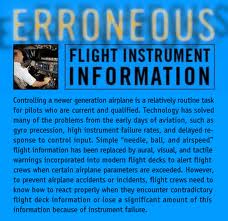
   The reason this blogger is not responding to the new book on AF447 released last week is that the BEA (+ EASA now?) still has to determine what instruments were in fact available to the 3 pilots in the cockpit after the autopilot disconnect at cruising altitude, and to perform as well an in-depth analysis of so-called ‘Human Factors’ which is the hallmark of a comprehensive and professional investigation into aviation accidents and incidents.

   Rumour has it now that the BEA might make a finding of ‘excessive workload’ on the flight crew as a result of the Airbus 330’s computers defaulting to ‘Alternate’ mode when the airspeed sensors became ice-clogged. There was a lot of confusion in the cockpit. That much we know from the beginning when the CVR and FDR were finally recovered from a depth of 4 km (nearly 6,000 feet).

   The BEA (France’s equivalent to the American NTSB) might go as far as stating that the workload was excessive on the crew to the point of creating ‘unsafe conditions’, as a contributing factor in the AF447 crash. This finding, if confirmed by public authorities, would throw the ball back in Airbus’ court, as well as Air France and the Pitot tube manufacturer, all of whom were aware of the defective design of the Pitot tube and attendant consequences years before the fatal crash.

 Despite outward appearances (as publicized in the damaging book on the AF447 flight crew performance released last week), the flight crew might not likely have to shoulder significant blame for the crash.

  The point is the AF 447 flight crew was facing excessive workload from the aut0-pilot disconnect onward during the fatal crash of flight AF447.

  Airbus Industries (now EADS) and Air France should have alledgedly been aware, long before the AF447 crash, of such foreseable consequences of ice-clogged Pitot tubes then in use on this model of Airbus aircraft.


Posted in CivAv Reports | Tagged , , , , , , , , , , , , , , , , , , , , | Leave a comment

Airline Flight Automation

   Is automation or, conceivably artificial intelligence, gradually taking manual flight control away from airline pilots?

   This is a tough question few aviation experts are willing to face head-on.  Yet, given the spate of mishaps involving highly automated airliners and resulting in in-flight incidents and, much less frequently, in aviation accidents with significant loss of life, hardly anyone involved with designing the hardware and software behind the automation of modern airliners can escape the question.

   At present, there are no clear-cut answers. Some aviation safety investigation experts are still suggesting that on-board fly-by-wire hardware and software be improved in order for airline pilots to actually remain in charge of the airplane at any flight stage and be able to respond to unexpected in-flight challenges as they would with a conventional aircraft. Yet, nobody is tackling the basic underlying question:  Why are competent airline pilots sometimes unable to deal, in tight circumstances, with both the benefits and limitations of highly automated fly-by-wire controlled airliners?

Vagaries of flight automation

   Why, for instance, should high-tech airliner operating manuals state that pilots are not to interfere with the auto-land mode (q.v. by flying the aircraft manually) once auto-land is selected? Is the underlying message that, once committed to auto-land, pilots must stick with it no matter what - for instance, during a Category III landing - except for a pilot ordered go-around?

   This leads to another question: could it be that the more technologically advanced airliners are, the more pilots are inclined to remain hands-off during cruise-climb, cruise, descent, approach or landing stages of flight, despite pilot statements to the contrary?

   Well, there is the crux of the case.

   At present, airlines and public air transport authorities need to make a clear distinction  between electronically assisted flight control and full flight management and control automation. Moreover, the initial and proficiency training of airline pilots needs further fine tuning in either case. 

   The tragic but sadly avoidable crash of AF447 on June 1, 2009, is but one major and recent accident involving advanced aircraft automation, awaiting technical recommendations from civil aviation authorities, that may provide some reassurance and solace to relatives and friends of victims of the crash that the industry can learn from its mistakes.

   Modern airline flight operations appear to industry observers, including this humble blogger, who are unfamiliar with the latest on-board automation features, as a radical change in flying philosophy. Pilots of technologically advanced airliners no longer have direct three-axis and engine power inputs on such aircraft. Instead, they have to deal with a third party in the cockpit: the on-board flight management and control system run by one or more computers. This is a major mind-shift that pilots of so-called conventional aircraft and the airline industry at large have to contend with and catch up to, by relying more than ever on continuing and close support from aircraft manufacturers.  And so do civil aviation regulatory authorities.

   There isn’t much room at all for aviation safety stakeholders to play any sort of cat and mouse game with each other, while air transport flight automation is making quantum leaps. The investigation into Air France flight AF447 disaster that occurred on June 1, 2009, is a case in point.


Posted in Aviation regulatory affairs, CivAv Reports | Tagged , , , , , , , , , , , , , , | Leave a comment